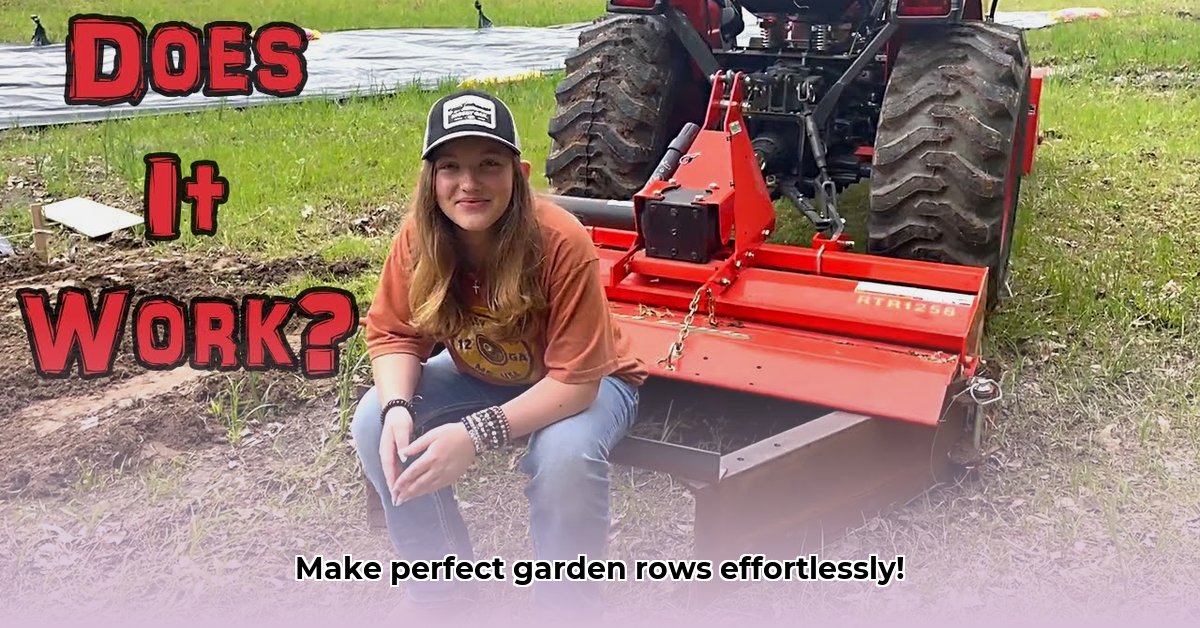
Tired of backbreaking labor preparing your garden beds? Using a tractor can significantly reduce the effort involved in creating perfectly spaced rows, while also allowing for sustainable gardening practices. This guide will walk you through the process, focusing on various tractor implements and highlighting their strengths and weaknesses for different soil types and gardening styles. We'll provide step-by-step instructions, safety tips, and real-world examples to ensure you achieve optimal results and promote soil health. For more information on three-point hitches, check out this helpful resource: Three-Point Hitch Tractors.
Choosing the Right Tractor Implement
Several attachments transform your tractor into a highly efficient gardening tool. Each offers unique advantages and disadvantages depending upon your needs and soil conditions. Let's explore three popular options: the hiller, the middle buster, and the garden combo.
The Hiller: Creating Raised Rows
The hiller gently pushes soil to the sides, forming raised rows ideal for drainage and minimizing soil compaction. This method is particularly beneficial for crops needing well-drained conditions.
Step-by-Step Hiller Operation:
- Secure the Hiller: Carefully attach the hiller to your tractor's three-point hitch, following your tractor's manual for precise instructions. Safety is paramount!
- Adjust Settings: Determine the desired depth and width of your rows, considering the size of your plants. Experiment to find the optimal settings.
- Engage the PTO (Power Take-Off): Engage the PTO to power the hiller before starting the process.
- Drive Slowly and Evenly: Maintain a slow, steady pace, following marked lines to create even rows. Avoid rushing.
- Monitor and Adjust: Regularly observe the hiller's performance; adjust settings as needed to ensure consistently even rows.
Pros & Cons of the Hiller:
- Pros: Creates raised beds improving drainage, suitable for many crops, relatively easy to operate, minimizes soil disturbance.
- Cons: May struggle with extremely heavy clay soils, not ideal for all soil types or planting methods.
The Middle Buster: Creating Deep Furrows
The middle buster creates deep furrows by splitting the soil, ideal for root vegetables requiring deeper planting. This method offers enhanced drainage but may result in more soil disruption.
Step-by-Step Middle Buster Operation:
- Secure Attachment: Robustly attach the middle buster to the tractor's three-point hitch. Refer to your tractor's manual for specific attachment instructions.
- Adjust Depth and Width: Set the desired plow depth and width based on your row spacing and plant requirements. Consult the implement's manual for guidance.
- Engage the PTO and Proceed: Engage the PTO and drive slowly and steadily across the garden, overlapping each pass slightly for consistent furrow depth.
- Maintain Consistent Speed: Consistent speed prevents uneven furrow depth.
- Caution: Middle busters significantly disturb soil. Proceed cautiously.
Pros & Cons of the Middle Buster:
- Pros: Excellent for root crops, creates deep furrows improving drainage, versatile across many soil types.
- Cons: More challenging to operate than a hiller, causes significant soil disruption, potentially impacting long-term soil structure negatively.
The Garden Combo: Versatile Functionality
Garden combo implements combine tilling, furrowing, and hilling functionalities. Convenience comes at the cost of increased operational complexity.
Step-by-Step Garden Combo Operation:
- Consult the Manual: Read your specific implement's manual thoroughly before beginning operation. Each model functions differently.
- Adjust Settings: Adjust tilling depth, furrowing depth, and hilling width, according to your specific needs and the manual's instructions.
- Engage PTO and Drive: Engage the PTO and slowly and steadily operate the implement, ensuring consistent movement.
- Continuous Monitoring and Adjustments: Closely observe the implement's performance and make adjustments as required to optimize results.
Pros & Cons of the Garden Combo:
- Pros: Convenient, all-in-one functionality, cost-effective for diverse tasks.
- Cons: Steeper learning curve, more expensive than specialized implements.
Comparing Implement Options
| Implement | Cost | Ease of Use | Soil Disturbance | Best for Soil Type | Long-Term Soil Impact |
|---|---|---|---|---|---|
| Hiller | Low to Medium | Easy | Low to Moderate | Loam, sandy loam | Generally positive |
| Middle Buster | Low to Medium | Moderate | Moderate to High | Most soil types | Potentially negative |
| Garden Combo | Medium to High | Difficult | Variable | Depends on configuration | Variable |
Sustainable Practices: Minimizing Soil Disturbance
Sustainable gardening practices prioritize minimizing soil disruption. Over-tilling negatively impacts soil structure, leading to erosion and reduced fertility. Consider no-till or reduced-till methods whenever feasible. The ideal implement depends on soil type, crops, and personal preferences. Careful planning and execution are paramount to a thriving and sustainable garden.
Choosing the Right Implement for Minimal Soil Disturbance
The best choice for sustainable row creation depends heavily on your specific needs and conditions. Considering factors like your soil's texture and the type of crops you're planting will help you make an informed decision that supports soil health. Remember that minimizing soil disturbance is essential for maintaining long-term soil fertility and reducing erosion. Careful consideration of these factors will contribute to a successful and environmentally responsible gardening operation.
Key Takeaways:
- Minimizing soil disturbance is crucial for sustainable agriculture.
- Choosing the right implement greatly impacts soil health and long-term productivity.
- Proper technique significantly influences the effectiveness of your row creation process.